
Exance
The specialist MGA for construction insurance brokers.
exance.co.uk

Lytchett House, 13 Freeland Park, Wareham Road,
Poole, Dorset, BH16 6FA

Accquis backs businesses. We put capital behind them, we run the infrastructure underneath them, and in most cases we do both, across insurance, intermediation, payments, property and special situations.
Fuelling Ambition. Transforming Industries.
Family office money with no fund clock and no redemption window. First in, and in the same vehicle as everyone who follows. We take positions we can operate, and we hold them.
Origination, underwriting, payment rails, structuring and back office. The four years a business would otherwise spend assembling what we already run.
We describe what we have backed by the shape of the business and what we put into it, rather than by a list of names. The businesses trade under their own brands, run their own management and hold their own arrangements. What Accquis provides is capital, infrastructure, or both.
Do not build the plumbing. Plug into ours, and keep your brand.
We do not introduce. We co-invest, in the same vehicle, on the same terms.
A quick answer is worth more than a high one.
Appetite, a named underwriter, and a route that gets picked up.
An operator, not an adviser. Our own capital and our own people.
Most people your age are running one line of one business.
Nine businesses do not get nine finance functions, nine ways of onboarding and nine versions of the truth. They plug into one. That layer is increasingly run by machines that read, reconcile, route and check, supervised by people who remain accountable for the outcome.
One place where a policy, a payment, a tenancy or a drawdown is recorded. Backing the tenth business is a process rather than a project because the layer already exists.
A figure that is not recorded, owned and dated is not used. The same discipline that governs this website governs the reporting underneath it.
Artificial intelligence does the reading, the matching and the first pass. A named person signs the decision. We do not publish a judgement that nobody owns.
Described by what the business does and what Accquis put into it. Each trades under its own brand, runs its own management and holds its own arrangements. We are the backer, not the parent.
| Style of business | Market | What we provided |
|---|---|---|
| A wholesale broker and MGA | Property, construction and financial lines · United Kingdom | Capital & infrastructure |
| A comparison and distribution platform | Construction and property · United Kingdom | Infrastructure |
| A long-term construction risk business | New build, conversion and refurbishment · United Kingdom | Capital & infrastructure |
| A specialist underwriting business | Developers, funders and freeholders · United Kingdom | Capital |
| A chartered surveying practice | Residential and large-scale construction · United Kingdom | Capital |
| A payments and rails capability | Premium, rent, drawdowns and distributions | Infrastructure |
| An international origination business | Construction and infrastructure · West Africa | Capital & infrastructure |
| A government-let office portfolio | United Kingdom, Europe and the United States | Capital |
| A multifamily residential fund | HUD housing · United States | Capital |

Control positions, or a seat with real influence. Where we cannot affect the outcome it is a trade, and we do not do trades.
If the thing holding a business back is origination, underwriting, rails or back office, we already run it.
Family office money has no fund clock, so nothing needs to be sold to hit a date.
If we cannot shape what happens, our capital is just money, and money is the easiest thing in this market to find.
Some businesses need a trade buyer, or need to stay independent. We will say so in the first conversation rather than the fourth.
If the case only works with a favourable assumption, it does not work.

A business we back plugs into infrastructure we already run. Where the business comes from, the authority it is written under, the rails the money moves on, the vehicle it is structured through, and the balance sheet behind it.
Demand that already exists in the market you are entering. A broker network and comparison pages carrying live enquiry, rather than a cold acquisition budget.
Written appetite, a named underwriter on the risk, and a referral route that gets picked up. The complaint in these markets is never price.
Premium, claims, rent, drawdowns and distributions all move on rails. A backer that provides origination but rents its rails provides half the flow.
One project, one vehicle. Never pooled into a blind fund, ring-fenced, with the exit timetable set before the money moves.
A family office balance sheet with no redemption window. It sets the mandate and it is the first money into everything we back.
One CRM and campaign spine, one component library, one onboarding playbook, one registered set of facts. It is what makes backing the tenth business a process rather than a project, and it is where machine work earns the most, because the model that reads one business’s renewals reads all nine.

Nobody takes all five. A founder with a product and no distribution takes origination and rails. A broker with distribution and no capital takes structure and capital. The point of running all five is that we can start wherever the gap actually is.
The link most backers rent. We back the brands that originate, the network that places, and the comparison pages that carry the enquiry.
Placing across construction, property, financial lines and specialty in the United Kingdom. A business we back reaches them on day one rather than on month eighteen.
Comparison pages in construction and property. Live demand, already indexed, already converting.
In West Africa we ran our own broker event rather than buying an audience. It is the template for every new market: go, meet, and be useful before asking for anything.
The complaint in specialty markets is never price. It is that quotations are slow, referrals disappear, and nobody picks up the phone.
Set before the first risk is seen, not negotiated afterwards. A broker knows in one page what will be looked at and what will not.
On the risk, reachable, and accountable for the answer. Not a shared inbox and not a queue.
Referrals have a named owner and a stated turnaround. The commonest reason a deal dies is that nobody knew whose desk it was on.
Premium collection, service charge, rent, development drawdowns, claims disbursement and investor distributions all run on payment rails.

Collection in, disbursement out. The flow a broker and an underwriter both depend on and neither usually controls.
Development capital released against progress, income collected against a contract. Property runs on scheduled movements of money.
A vehicle that pays out on time, to the right people, with a record of it. The least glamorous part of a structure and the part that gets noticed.
Family office capital is never pooled into a blind fund. It is deployed project by project, through a dedicated vehicle for each one.
One project's risk cannot reach another's. A difficult asset is contained where it sits, and a good one is not dragged down by it.
Investors choose the project rather than accepting whatever a pooled fund buys next. You can say no to one and yes to the next.
A single-asset vehicle can be sold, refinanced or wound up on its own timetable, without needing to be right about anything else.

A family office balance sheet with no fund clock and no redemption window. It sets the mandate, it is the first money in, and it is why we can give an answer rather than run a process.
Nothing has to be sold to hit a date. That single fact changes which assets are worth owning and how long we are prepared to be early.
We commit before we invite anyone. The simplest test of conviction is whether the person telling you about it is in it.
A decision comes from people who can make it, in a timeframe a seller or a founder can actually plan around.

That is the difference between assembling the infrastructure yourself and plugging into infrastructure that already runs. Keep your brand. Borrow our balance sheet. You stay in your market; we sit underneath it.
A broker network and comparison pages carrying live enquiry, rather than a cold acquisition budget and eighteen months of waiting.
Our analysis behind the risk and a referral route that answers, from day one.
Premium in, claims out, and a reconciliation you do not have to reconstruct at month end.
A vehicle per project, plus CRM, campaign, component library and onboarding playbook. Built once and lent to everything we back.
We take a minority position and a seat, not control. You keep running your business.

Every project we bring to the table has been underwritten by us, and in most cases we are already in it alongside you. That is the simplest test of conviction there is: whether they are in the trade.
Not a pipeline of introductions. Projects we sourced, underwrote and committed to before anyone saw them.
Government-let office stock in the UK, Europe and the USA, and US multifamily HUD residential. No aggregated headline number.
A direct interest in the project you chose, ring-fenced, with the exit timetable set before the money moves.
You are worried about four things: your people, your clients, your name, and whether the earn-out is real. Those are the right things to worry about, and most buyers will not put their answer in writing until you are already in a process. Ours is on this page.
Confidential, with a principal. No adviser, no process, no obligation. Usually an hour.
In writing, with the structure set out in full, before either side spends money on diligence.
The plan is written and agreed before signature, not after. You will have read it.
Your brand and client relationships stay where they are. Finance, technology and reporting move onto our spine.
A meaningful sum at completion. An earn-out over three to five years. An equity rollover, so you own a piece of what your business becomes. And a written 100-day plan agreed before signature.
Your brand, your client relationships, your service team and the people your clients speak to.
Finance, technology and reporting move onto the group spine. We are not going to pretend this part is invisible.
We are an owner, not a cost programme. What happens to the team is the first question we answer, not the last.
We take distressed and asset-backed businesses, stabilise them, and either keep backing them or hand them back working. We put our own capital and our own people in.
| Day | What happens |
|---|---|
| D+7 | Cash, capital adequacy and exposure assessed. We tell you what we find, including the parts you already suspected. |
| D+30 | Trading stopped, repriced or rehoused. The bleeding stops before anything else is attempted. |
| D+60 | Cost base, systems and distribution moved onto our spine where that helps and left alone where it does not. |
| D+90 | A funded plan, a named accountable executive, and a decision that somebody owns. |
Confidential by default. The first call is with a principal, not an analyst.
Advice arrives as a document. At this stage the business needs decisions taken and people put in, and it needs them this week rather than after the next board.
We will not bid for a business we have advised pro bono. That is written into the offer, and it is the only thing that makes the offer credible.
The businesses we back publish what they write and what they decline, name the underwriter on the risk, and give you a route that gets picked up. We are an owner behind them, not a cost programme.
One page, set in advance. You know what will be looked at before you spend an afternoon packaging it.
On the risk, reachable, and accountable for the answer. Not a shared inbox.
Referrals have an owner and a stated turnaround. The commonest reason a deal dies is that nobody knew whose desk it was on.

Government-let offices in the UK, Europe and the USA, and multifamily housing in the United States. Both government-adjacent, and reported separately. Long-dated, contracted income, public-sector counterparties, and a hold period matched to the life of the asset rather than to a fund clock.
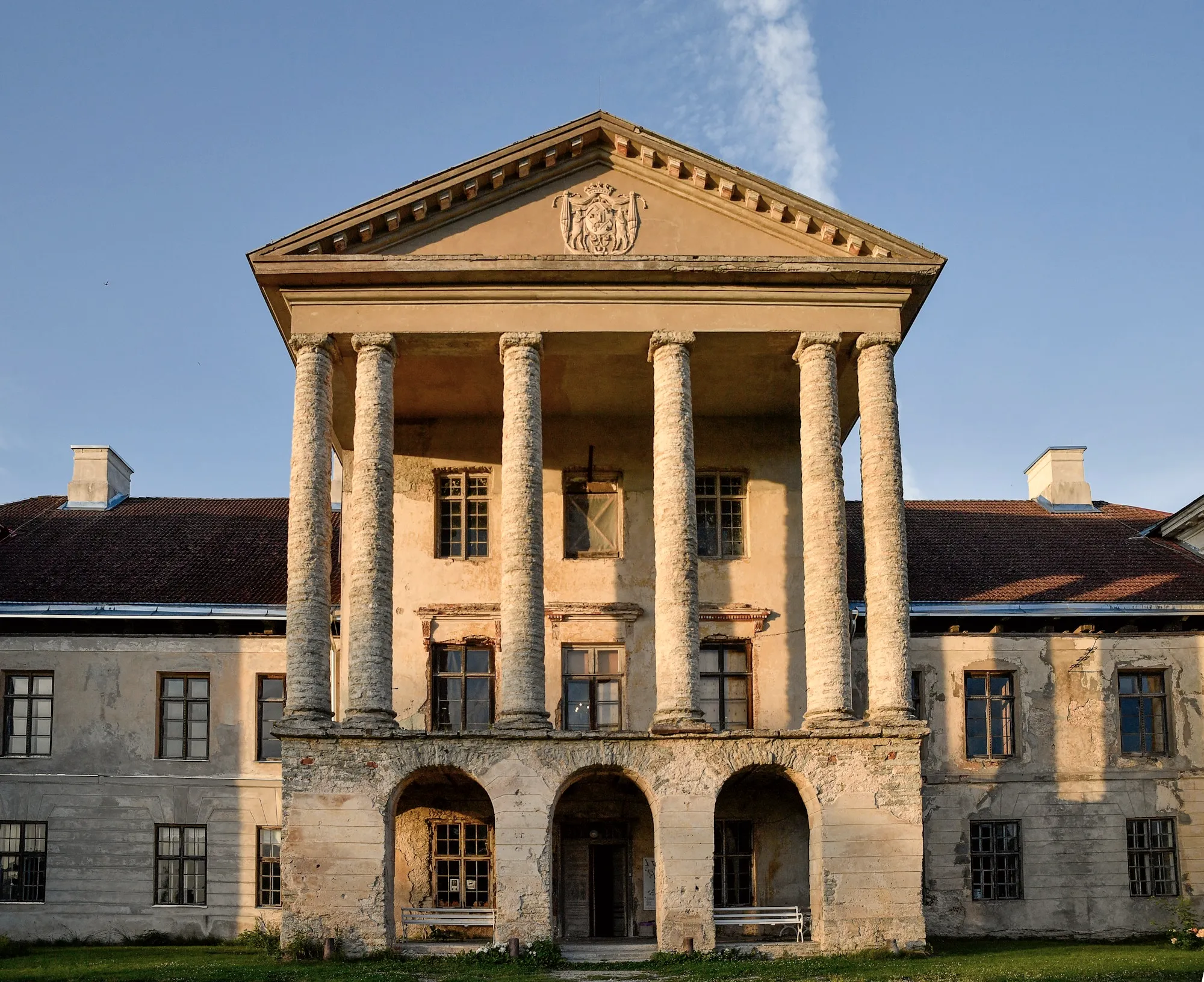
In the United Kingdom, Europe and the United States.
Long-dated leases to public-sector counterparties. The covenant, not the postcode, is what is being bought, which is why this holds up in a market where offices generally do not.

A ten-year amortising profile matched to the life of the asset. Repayment is designed in from the start rather than refinanced into existence later.
We do not publish an aggregated portfolio number. Refusing to aggregate is the point.
An aggregate hides which part is working. Each fund answers on its own assets, its own counterparties and its own timetable.
Fuelling Ambition. Transforming Industries.
Accquis backs businesses. We are not their parent and we do not consolidate them into a single brand. They trade under their own names, run their own management and hold their own arrangements. What we bring is capital, the infrastructure underneath, and a balance sheet that answers to one family rather than to a fund clock.
Every number we publish has an owner and a source. If it cannot be evidenced, it does not get said.
Positions we can operate. Where we cannot influence the outcome it is a trade, and we do not do trades.
No fund clock and no redemption window. The holding period is designed in, not hoped for.
Origination, underwriting, rails and technology built once and lent to everything we back.
A named person is accountable for every business we back and every project we structure. Including the difficult ones.
The test for all five is the same: could a family office principal, a counterparty and a founder each read this page and find the same group?

The governance behind a backing decision, and who is accountable for it.
The people accountable for each part of it.
Consultancy hours, free, to businesses in distress, with a rule attached.

We back businesses rather than owning them, so the governance worth publishing is how a backing decision gets made, not a description of arrangements that belong to somebody else.
Sourced and screened against the mandate before any work begins. Most things stop here, and stopping here is cheap.
Our own analysis, in writing, with the case against set out alongside the case for. If the case only works on a favourable assumption, it does not work.
An investment committee decision, minuted, with a named sponsor who lives with it afterwards.
Monthly against the plan agreed at commitment, not against a revised one. Revising the plan to meet the result is how groups lose track of what is actually happening.
One project, one vehicle, so a single position cannot reach the rest. Exposure is monitored across vehicles as well as inside them.
A security standard applied when a position is taken and again when it renews, not only at the outset.
Committed capital is matched to the life of the asset. No position depends on refinancing that has not been arranged.
The businesses we back run on documented processes, not on individuals. Where they do not, that is the first thing we fix.
Zero appetite. Screening at onboarding and at every material transaction.
We do not bid for a business we have advised pro bono. Written down, published, and the only thing that makes the offer credible.
A named person is accountable for every business we back and every project we structure. Including the difficult ones.
Leaders are set out by name, role and jurisdiction on request rather than published as a grid of portraits. If you are talking to us about a business, you will be told who carries it before you are told anything else.
A group board setting mandate and appetite, an investment committee taking commitment decisions, and a named sponsor carrying each position afterwards.
The person who recommended a position reviews it monthly against the plan they wrote. There is no handover to a portfolio team that inherits somebody else's optimism.

Small teams, real mandates, and a balance sheet that does not need permission from a fund committee. We hire wherever the person is.
In one place, and the teams are small enough that you will touch more than one. There is no version of this role at a large institution.
Long-dated projects and no quarter-end theatre, which means accountable for outcomes rather than for activity.
We work across markets and do not need you to move. If you would rather be in a room, the door is open, but nobody relocates to prove commitment.
And nothing like enough that you will be doing the same thing in ten years. That window does not stay open at any firm.
We give consultancy time free of charge to businesses in distress. Not as a route into a cheap acquisition, and not as marketing. Distressed owners are the easiest people in commerce to exploit, and our position is that some of our expertise should be available to them with nothing attached.
Restructuring, cash flow, creditor conversations, and an honest read on whether the business can be saved.
Written into the offer. It is the only thing that makes the offer credible, and it is on the page so you can hold us to it.
A mental health charity built on a single idea: that people should look out for each other, one check-in at a time. Financial distress and mental health are the same crisis viewed from two sides, and the person carrying it is usually the last to say so. The charity does the part we cannot: getting someone to talk before it is critical.
Occasional writing on structure, capital and the mechanics of backing a business. No market commentary, no predictions, and nothing we would not say in a first meeting.
Most of what is published in this market is written to be agreed with. These are written to be argued with, which is the only reason to publish anything.
Every group of our shape gets asked the same question early in a first meeting: how big is it. There is an easy answer available. We do not give it.
An aggregated figure across businesses that share no balance sheet, no market and no management team is not information. It is one number standing in front of several unrelated ones, and its principal function is to make the group sound larger than any part of it is.
Add a wholesale broker to a comparison platform and a property position and you have produced an arithmetic result with no economic meaning. Nobody allocates against it. Nobody prices against it. It cannot be used to judge whether any individual business is working, which is the only question that matters to the people running them.
It also flatters, which is the more serious problem. An aggregate carries the strongest position and the weakest one at identical weight, so a business in difficulty disappears into the total. The moment it disappears, it stops being managed. Groups do not usually fail because somebody read a bad number. They fail because the bad number was never visible on its own.
An aggregate is the most comfortable number in the room and the least useful one.
Each business is described by what it does and by what Accquis put into it. Each position is held on its own, reported on its own terms, and judged against the plan agreed at commitment rather than against a plan revised afterwards to meet the result.
That means there is no single slide. It means a conversation about one asset is a conversation about that asset, and it means a weak one has nowhere to hide. All three of those are the point rather than a side effect.
It makes us harder to summarise. A group that will not state a size cannot be ranked, and being unrankable costs something in a market where people shortlist on scale before they shortlist on anything else.
We think that is a fair price. A figure that cannot be acted on is not worth the credibility it spends, and the first time somebody acts on it, the credibility is gone anyway.
A business plan has a line for people and a line for premises. It almost never has a line for the apparatus: the written appetite, the referral routing, the payment rails, the reconciliation, the reporting that tells you on a Tuesday what happened on the Monday.
That work is invisible until it is missing, which is why it is nearly always built late, under pressure, by people who were hired to do something else.
A business that grows past its first form ends up building the same set of things. A way of saying what it will and will not look at. A way of making sure a question reaches a named person rather than a shared inbox. A way of moving money that does not depend on somebody remembering. A way of closing a month. A way of knowing, without asking, where the time went.
Each of those is a project with its own false starts. Together they are the stretch of years that sits between a good business and one that can be scaled, and they are almost never in the plan that raised the money.
It is built late, because it never wins an argument against revenue work and it should not expect to. It is built by whoever happens to be available, because nobody is recruited for it specifically. And it is built again from the start in every business that needs it, which is a straightforward waste that nobody is incentivised to stop.
The infrastructure argument is not that ours is clever. It is that it already exists.
This is the part of backing that does not photograph well. Capital is easy to describe and easy to compare. The apparatus is neither, and it is the part a founder notices in the first month rather than the first year.
Running it once and letting a backed business use it is the only version of this that saves anybody time. It has to be genuinely optional as well as nominally optional: a business that already has a better payment route keeps its better payment route, and a business that wants to keep its own reporting keeps that too. Infrastructure offered on condition is not infrastructure, it is control with a friendlier name.
It does not make a weak business strong. It removes one named constraint and leaves every other constraint precisely where it was. A business that cannot sell will still not sell. We say that early and in writing, because the alternative is a founder who was allowed to expect something else and finds out in year two.
The pooled fund is the default structure in private capital, and for a manager it is obviously the better deal. Capital is committed before anything is bought, fees run on commitments rather than on performance, and a difficult asset is absorbed into a portfolio average where nobody has to look at it directly.
For the person putting the money in, all three of those are costs rather than features.
Committing to a blind pool means accepting whatever the manager buys next. You are not underwriting an asset; you are underwriting a person's future judgement, in market conditions neither of you can see yet. That is a perfectly reasonable thing to do if you know the manager extremely well. It is a strange thing to do on the basis of a track record deck.
You also lose the ability to say no to one thing and yes to another. In a pooled structure, declining a single asset means declining the fund. Most investors, presented with the actual list a year later, would have taken some of it and passed on the rest.
Refusing to aggregate is not a reporting preference. It is what lets somebody see which part is working.
One project in one vehicle means a difficult asset is contained where it sits. It cannot reach the other positions, it cannot force a sale elsewhere to meet a redemption, and it can be dealt with on its own terms and its own timetable.
It also means the exit is designed at the start rather than improvised at the end. A single-asset vehicle can be sold, refinanced or wound up without needing to be right about anything else in the portfolio.
It is more work. Every project needs its own vehicle, its own governance and its own reporting, and every investor conversation is about a specific asset rather than a strategy. A pooled fund raises once and deploys for five years; this raises every time.
We think that is the right trade, for a reason that has nothing to do with investor preference: it keeps us honest. When each position has to be justified on its own to somebody who can decline it, the marginal deal (the one that would have disappeared into a portfolio average) does not get done.
Every insurance and property business is, underneath, a set of scheduled movements of money. Premium collected. Claims disbursed. Rent received. Service charge apportioned. Development capital released against progress. Investor distributions paid on a date somebody promised.
Almost none of those movements are controlled by the businesses that depend on them.
A broker owns the client relationship and rents the rails. An underwriter owns the risk and rents the rails. A property manager owns the asset and rents the rails. In each case the flow that determines whether the month reconciles belongs to somebody else, who has no particular interest in whether it does.
The consequence is familiar to anyone who has run one of these businesses: reconciliation becomes a monthly archaeology exercise, the cash position is a question somebody has to go and find out, and the data that would tell you where the friction is never quite arrives in a usable form.
A backer that provides origination and underwriting but rents its rails provides half the flow, and sees half the data.
Running the rails is not a technology ambition. Rails are infrastructure, and infrastructure is the thing a backed business actually needs on a Tuesday. The value is not in the technology. It is in knowing, without asking anyone, where the money is.
That knowledge compounds in a way the individual transactions do not. Once you can see premium landing, claims leaving and distributions clearing on one view, you can price the friction, and pricing the friction is how a service gets materially better rather than incrementally cheaper.
Payments is the most regulated thing this group touches and the most tempting to boast about. So: nothing on our site claims a permission, and nothing describes a capability we cannot tie to money that actually moves. If that reads as restraint, it is deliberate. A payments claim with no flow behind it is a slogan.
"Backing" is one of those words that has been used so loosely it has almost stopped meaning anything. It is worth being specific, because the difference between backing a business and owning one determines almost everything about how the relationship works.
It is not acquisition. The businesses we back keep their own names, their own management and their own arrangements. Nothing is consolidated into a single brand, and a client of one of them does not become a client of ours.
It is also not passive investment. A cheque with no involvement is the easiest thing in this market to obtain, and it is rarely the thing holding a good business back.
Where we cannot influence the outcome, it is a trade. We do not do trades.
Two things, and usually both. Capital, from a balance sheet with no fund clock, committed first and held in the same vehicle as everyone who follows. And infrastructure (origination, underwriting, rails, structuring, back office) built once and lent to whatever we back.
The second is the part people underestimate. Most businesses that fail to scale are not short of capital. They are short of the four years it takes to assemble distribution, authority, rails and a back office that works, and they run out of patience or money somewhere in year two.
A seat, and the honesty to use it. We take minority positions and we expect to be told things early, including the bad ones. In exchange the phone gets answered, the answer comes from a principal, and nobody has to wait for a committee that meets next month.
That is the whole arrangement. It is deliberately unglamorous, and it is the reason the businesses we back can get on with being themselves.
Every business we back plugs into one layer rather than building its own. What that layer is, what runs on it, and what we will not claim for it.
Most groups end up with ten. Ten finance functions, ten onboarding processes, ten definitions of a renewal, and a holding company that spends its time reconciling them. The cost does not show up as a line item. It shows up as slowness.
These are the four jobs that consume a group’s time and that machines are genuinely good at. They are also the four where a mistake is cheap to catch and expensive to miss, which is why each one has a person attached to it.
Submissions, statements, leases, schedules. The first pass is machine work. The judgement is not.
Money to obligation, claim to cover, payment to tenancy. Reconciliation is the single largest consumer of back-office time in every business we have looked at.
An enquiry reaching the person who can answer it, first time. The complaint in these markets is never price.
Every claim on this website is checked against a rule before it can be published. A page that fails is rewritten rather than waived. The same discipline runs underneath the reporting.
It does not. Every decision that commits the group to anything has a named person behind it, and that person is accountable whether the first pass was done by a machine or not.
We are not going to publish a percentage we cannot evidence, and the honest position is that this work changes what people spend their time on before it changes how many of them there are.
It is a direction, not a completed state. Some of it runs today, some of it is being built, and we would rather describe the method than claim the destination.
Not an analyst, not an associate, and not a queue. What you write below reaches a principal. Tell us what you have and we will tell you quickly whether it is for us, including when it is not.
Confidential by default. Nothing is shared inside the group without your agreement and nothing outside it at all.
Bring the product and the team. We will tell you what we would put underneath it.
Say so in the first line and it goes to a principal the same day.
Accquis backs businesses. It does not itself transact regulated business, and nothing on this site is an offer, an inducement or a recommendation.
Most businesses do not fail at the thing they are good at. They fail at the link next to it: the capital that ran out, the apparatus that never got built, the payment that took eleven days when it should have taken one. Accquis exists to take that link off the table.
A business that is bought loses the thing that made it worth buying. A business that is backed keeps its name, its management and its arrangements, and gains the link it was short of. That is a harder model to run and it is the only one that leaves the founder with something.
Family office capital has no redemption window and no fund clock. It means we can say no to a quick exit that would be good for us and bad for the business, and it means the answer to “what happens in year seven” is not governed by a document signed in year one.
A founder or an owner gets a real answer from someone who can give one. If the answer is no, it arrives quickly and with the reason attached. The slow maybe is the most expensive thing in this market and we do not trade in it.
Where the group has given time to a business in difficulty, it does not then make an offer for it. The two cannot be held at once and the second one poisons the first.
The businesses we back hold their own permissions, run their own management and answer for their own decisions. We do not take credit for their work and we do not stand behind claims that are theirs to make.
Every figure on this site carries an owner, a source and a review date, or it does not appear. Where something is still being confirmed it is marked rather than smoothed over.
If a decision needs six people it usually needs one. The group runs on small teams with a named person answerable for each thing, because that is what makes an answer fast and a mistake traceable.
We are not trying to make nine businesses look like one. They trade under their own names and they compete on their own terms.
Long hours are usually a sign that something upstream is broken. If a team is drowning, the apparatus is what gets fixed.
Small teams mean there is nowhere to sit quietly. It suits people who want the decision and not everyone does.
The group gives professional time to businesses and causes that need it, in the places its people actually live and work. A donation is easy to make and easy to forget. An afternoon from someone who knows how to read a set of accounts is harder to give and worth considerably more.
Corporate finance, underwriting, technology and operational time, given by the people who do it for a living rather than by a committee. Where a cause needs money as well, it is given quietly and it is not the part we talk about.
By the people doing the work, in the places they are from, rather than by a brand strategy. It is why the list is uneven and local rather than national and tidy, and we would rather it stayed that way.
Business failure is treated as a commercial event and lived as a personal one. Owners carry it alone, usually for months before anyone else knows, and the people closest to them are the last to be told.
The group supports a campaign built on one idea: ask someone how they actually are, and then wait for the second answer.
Ask twice. The first answer is almost always “fine”.
A fund that must return capital in year seven will demolish and rebuild, because the numbers only work on that horizon. A balance sheet with no redemption window can retrofit instead, hold the asset, and take the return over twenty years. That is the group’s honest environmental argument, and it is a structural one rather than a moral one.
The group does not publish a carbon figure, a net-zero date or a rating, because it does not yet measure to a standard that would make any of those honest. Saying so is more useful than a number nobody has checked.
It does not claim the environmental performance of the businesses it backs. Those are their figures, their targets and their disclosures to make, and borrowing them would be the same error as borrowing a permission.
An unmeasured number is a claim, not a commitment.
Accquis is the masterbrand. Each of the businesses below trades under its own name, keeps its own management and holds its own arrangements. Accquis stands behind them quietly, as a line in the footer rather than a message in the headline.
The specialist MGA for construction insurance brokers.
exance.co.uk
The chartered specialist for serious construction risk. One project. Every phase.
checkmate-warranty.co.uk
The simple front door to property, construction, professional and finance cover.
compariqo.com
Protection for new homes and the people who build them, arranged for developers, homeowners and brokers.
oneguarantee.co.uk
Chartered building surveyors for the new build sector. Every technical survey in the group runs through Survteq.
survteq.comAn Accquis Group brand
Each business trades under its own name and runs its own management. When you see this line, it tells you who stands behind the business.
They share one design system and one way of working, and each leads with its own colour, type and voice. That is what makes them a family rather than a portfolio.
The businesses Accquis backs are set out by the shape of the business and what we put into it, rather than by name. Some of the brands here appear on that list in that form.
What we collect through this website, why we collect it, and what you can ask us to do with it.
Accquis Group Limited is the controller of personal data collected through this website. Our registered office is Lytchett House, 13 Freeland Park, Wareham Road, Poole, Dorset, BH16 6FA. You can contact us about this notice through the .
If you write to us through the enquiry form, we receive your name, your email address, the subject you choose and what you write. We do not ask for anything else, and we would ask you not to send financial or health information through the form.
Like any website, the servers that host this site record technical information such as your IP address and browser type in order to deliver the pages and keep them secure.
We use what you send us to reply to your enquiry and, if you wish, to continue the conversation. Our lawful basis is our legitimate interest in responding to people who contact us. Where a conversation becomes a contract, the basis becomes the performance of that contract.
Your enquiry is read by the person who will answer it. Nothing you tell us is shared inside the group without your agreement, and nothing is shared outside it, other than with the service providers who host this site and our email, under contracts that require them to protect it.
We keep an enquiry for as long as the conversation it starts is active, and then for no longer than we need to for legal or regulatory reasons. Enquiries that do not lead anywhere are deleted when they are no longer needed.
Under UK data protection law you may ask for a copy of the personal data we hold about you, ask us to correct or delete it, ask us to restrict or stop using it, and ask for it in a portable form. You may also complain to the Information Commissioner’s Office at ico.org.uk. We would ask you to speak to us first, so that we can put things right.
Last reviewed: November 2026.
This website is built to work without tracking you.
This site sets no advertising cookies and no cross-site tracking cookies. It does not build a profile of you, and it does not follow you to other websites.
The typefaces on this site are served from our own server. No third party receives a request when you load them.
If we add analytics, we will ask for your consent before any non-essential cookie is set, update this page first, and make it as easy to say no as to say yes.
Every browser lets you see, block and delete cookies in its settings. Blocking cookies will not stop this site from working.
The basis on which this website is provided. By using it, you accept these terms.
This website is provided by Accquis Group Limited to describe what the group does. It is information, not advice. It is not an offer or an invitation to invest, to buy or to sell anything, and it is not a recommendation.
We take care over what we publish, and every figure on this site has an owner and a source. Even so, the site is a general description and may not be complete or current for your purposes. Please do not rely on it in making a decision. Any transaction is made on its own documents and on nothing said here.
The businesses Accquis backs are separate companies. They hold their own authorisations and arrangements and are responsible for them. Accquis has backed and supported licensed entities in the UK and other countries; it does not itself hold those permissions.
The Accquis name, the star and the wordmark, and the words and drawings on this site, belong to Accquis Group Limited. You may read, print and share pages for your own reference. Please ask before using them for anything else.
Where we link to another website, including the websites of our brands, that site has its own terms, and we are not responsible for its content.
These terms are governed by the law of England and Wales, and the courts of England and Wales have jurisdiction over any dispute arising from them.
This site is built to WCAG 2.1 level AA. That is an acceptance criterion for every page, not an aspiration.